As an Amazon Associate, Almanac Kit earns from qualifying purchases. Prices and availability are shown on Amazon.
- Flights to Munich (MUC)Compare fares on Aviasales (opens in a new tab)
- Hotels in MunichCompare on CheapOAir (opens in a new tab)
- Phone data in GermanyeSIM on Airalo (opens in a new tab)
- Tickets and tours in MunichBrowse on Tiqets (opens in a new tab)
We may earn a commission if you book through these links. It doesn't change the price.
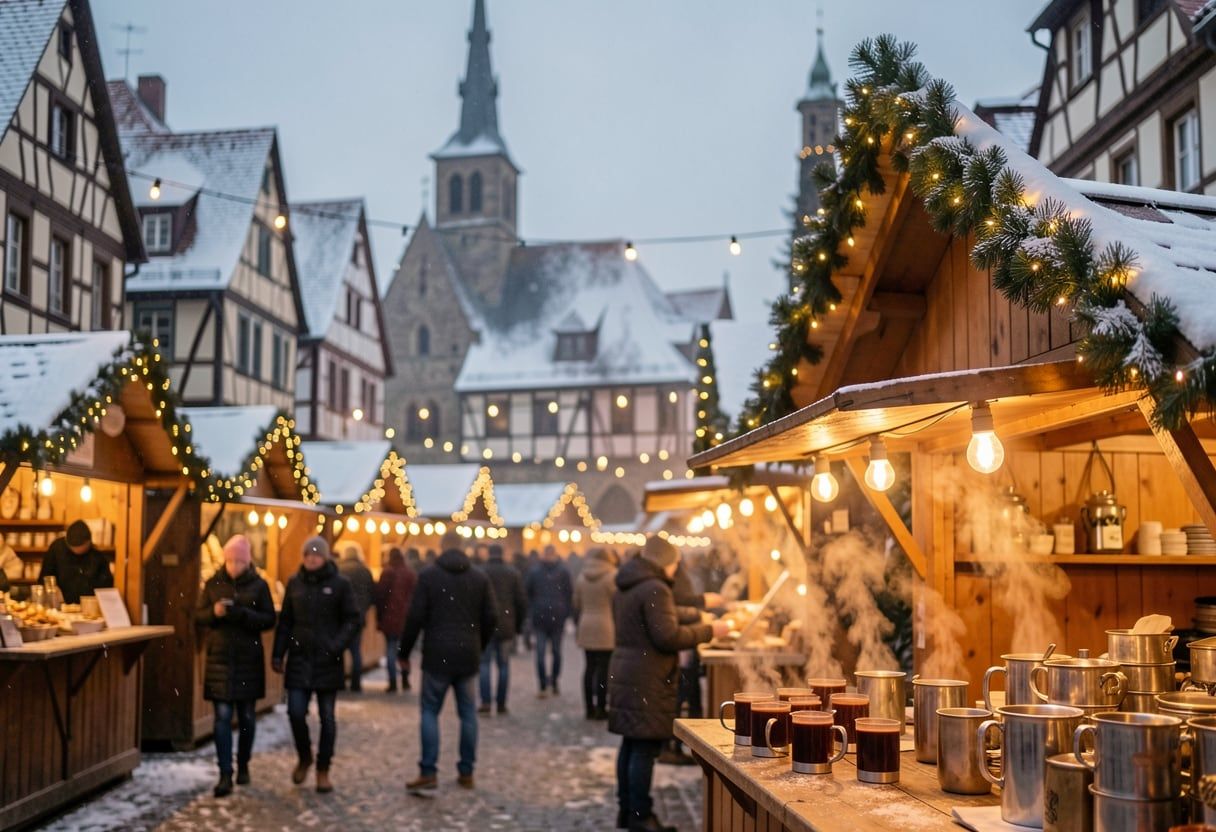
Germany has more than 2,500 Christmas markets, and most towns of any size have one: wooden stalls in the old square, mulled wine in a ceramic mug, sausages on the grill, and a lot of handmade ornaments. They’re best in the evening, when the lights come on and it’s cold enough to want a second Glühwein.
When they’re open in 2026
Most German markets open in the last week of November and close on December 23 or 24. A few run until New Year’s Eve.
- Nuremberg Christkindlesmarkt: November 27 to December 24, 2026, on the Hauptmarkt. It opens with the Christkind’s prologue on the evening of November 27. Daily 10 a.m. to 9 p.m., Christmas Eve until 2 p.m.
- Other big cities (Munich, Dresden, Cologne) usually open a few days earlier or later. Check each city’s official site for the 2026 dates before you book.
Weekday afternoons are the calmest. Saturday evenings in December are shoulder to shoulder.
The ones worth the trip
- Nuremberg: the most famous. Gingerbread (Lebkuchen), tiny Nuremberg sausages in a roll, and the prune-and-nut figures called Zwetschgenmännle. Go for the opening night if you can.
- Munich: the main market fills Marienplatz under the town hall, and there are a dozen smaller ones across the city, including a medieval market and a pink-themed one.
- Dresden Striezelmarkt: one of the oldest in Germany, dating back to 1434, and the home of Stollen, the fruit bread.
- Cologne: several markets, the biggest right next to the cathedral. Easy to reach by train from Frankfurt.
- Rothenburg ob der Tauber: a walled medieval town that looks like a Christmas card year-round. Small, crowded on weekends, magic at night.
How the mug deposit works
Mulled wine and hot chocolate come in a ceramic mug with a deposit (Pfand), usually a few euros. Bring the mug back to any stall at that market for the deposit, or keep it as a souvenir: each market prints its own design and year.
Many stalls still take cash only. Bring euros in small bills, and keep cards and passport in a neck wallet under your coat. Crowded markets are where pickpockets work.
The weather
Expect 30–40°F, damp, and dark by 4:30 p.m. Snow is possible but not guaranteed. Dress for standing still outside for hours: warm boots, a hat, and gloves you can use your phone in. Hand warmers in your pockets help more than you’d think.
Getting around
Fly into Munich (MUC) or Frankfurt (FRA). German trains connect the market cities quickly: Munich to Nuremberg is about 1 hour by ICE, Nuremberg to Rothenburg about 1.5 hours with changes. Book Deutsche Bahn tickets early for the cheapest saver fares, and watch for strikes in the news.
A car isn’t needed, and parking near the old towns in December is hard.
A 5-day route
- Day 1–2: Munich. Marienplatz, the medieval market, and a beer hall dinner.
- Day 3: Rothenburg as a day trip or one night.
- Day 4–5: Nuremberg. The Christkindlesmarkt, the children’s market next door, and the castle.
Add Dresden or Cologne if you have a week.
Before you go
US citizens don’t need a visa for short trips to Germany. Expect to have your fingerprints and photo taken at the border under the EU’s Entry/Exit System. The separate online travel authorization (ETIAS) has no confirmed start date yet; check the official EU site before you book. German outlets are type F at 230 volts: bring an adapter, and check that your chargers accept 100–240V (most phone and laptop chargers do).